Modular Kitchen vs Traditional Kitchen: Complete Indian Home Guide
Building a new home or planning an extensive kitchen renovation is an exciting milestone for any Indian homeowner. However, it quickly brings you face-to-face with one of the most stressful design dilemmas: modular kitchen vs traditional kitchen.
Should you opt for a sleek, factory-made modern kitchen design, or should you trust the local neighborhood carpenter to build a traditional kitchen design from scratch on-site?
In vibrant, fast-growing real estate hubs across India—from the bustling high-rises in Wakad and Hinjewadi to the expansive flats and bungalows in Baner, Pune, and the PCMC region—this choice impacts not just your home's aesthetics, but your everyday lifestyle.
Indian kitchen interior design is uniquely demanding. Our cooking style involves heavy spices, prolonged frying, daily use of heavy utensils, and the regular whistle of large pressure cookers. Therefore, your kitchen space must be highly functional, resilient, and easy to clean.
In this comprehensive guide, we will break down the differences between modular and traditional kitchens across design, storage, costs, durability, maintenance, and suitability for Indian cooking.
What is a Modular Kitchen?
A modular kitchen consists of standardized, factory-manufactured cabinet modules or units that are pre-assembled and then fitted together at your site.
Every component—from the kitchen cabinet design to the underlying steel hardware—is precisely engineered and cut using heavy industrial machinery. This ensures a flawless, high-end look and millimetric accuracy.
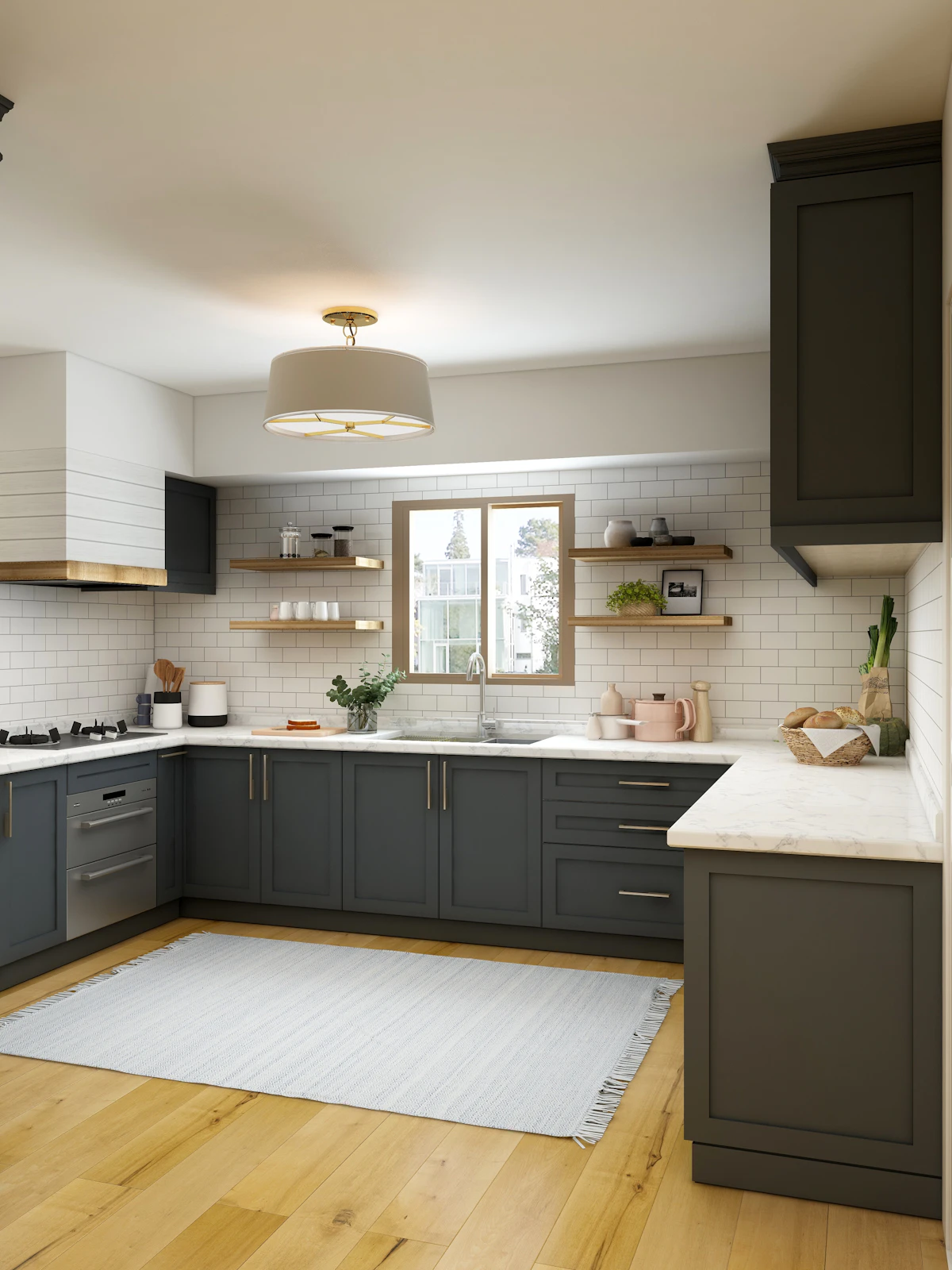
A modular kitchen for Indian homes is typically divided into distinct functional elements like base units, wall-mounted units, tall units for bulk grocery storage, dedicated corner units, and seamlessly integrated appliances like a built-in chimney and hob.
What is a Traditional Kitchen?
A traditional kitchen is built entirely on-site by local carpenters. It follows a conventional approach where brick-and-mortar masonry or stone vertical partitions, often made of Kadappa, granite, or marble, are laid out first by civil laborers.
The carpenter then builds wooden frames directly over these stone structures, creating customized plywood cabinets, doors, and shelves. Everything is cut, pasted, sanded, and polished manually right inside your home.
While this approach offers infinite manual customization, the final output depends heavily on the individual carpenter's skill level, patience, and the quality of manual tools used.
Head-to-Head Comparison Table
To give you a structured view, let’s compare how a factory-engineered modular kitchen design holds up against a traditional carpenter-made kitchen across crucial parameters.
| Parameter | Modular Kitchen Design | Traditional Kitchen Design |
|---|---|---|
| Design & Aesthetics | Sleek, seamless, contemporary. Flawless machine-finished edges with zero visible gaps or uneven lines. | Conventional look. Visual imperfections may occur due to manual cutting, hand-lamination, and polishing. |
| Kitchen Storage Solutions | Maximizes space with pull-out trolleys, soft-close drawers, tall units, and specialized corner units. | Mainly fixed horizontal shelves behind shutter doors. Accessing deep corners can be physically awkward. |
| Materials & Finishes | High-quality BWR marine plywood or HDHMR. Large range of premium finishes like acrylic, PU paint, and glass. | Standard commercial plywood or blockboards. Finish options are limited to manually glued laminates. |
| Installation Time | Manufacturing takes 3–4 weeks in the factory; on-site installation takes just 3 to 5 days. | Carpenter work on-site can stretch from 4 to 8 weeks, causing dust, noise, and constant supervision. |
| Durability & Maintenance | Highly durable when using moisture-resistant materials. Termite-treated and easy to dismantle and clean. | Sturdy stone base, but plywood frames can be vulnerable to water seepage, warping, and termite infestation. |
| Cost & Transparency | Clear upfront quotation based on modules. Premium pricing, but offers high value-for-money and clear warranties. | Appears cheaper initially, but material shortages, fluctuating labor costs, and wastage often cause budget overruns. |
Why Modular Kitchens are Popular in Modern Indian Homes
More and more homeowners in premium localities like Baner, Hinjewadi, and Chinchwad are moving away from traditional carpentry in favor of turnkey kitchen interiors.
1. Superior Space Utilization & Ergonomics
Modern apartments in urban areas often feature compact footprints. A modular layout optimizes every single inch of available floor and wall space.
By adopting a scientific approach based on the classic kitchen work triangle, which is the distance between the sink, refrigerator, and stove, these kitchens reduce your physical movement during food preparation, making cooking less exhausting.
2. Smart Kitchen Storage Solutions
Traditional deep shelves often turn into dark zones where forgotten masala jars expire out of sight. Modular setups eliminate this completely by solving everyday storage challenges elegantly.
- Trolleys and Drawers: Soft-close wire or tandem boxes allow you to store heavy utensils, kadhais, and plates. They pull out fully so everything is visible at a glance.
- Tall Units: These function like a highly organized pantry for monthly groceries, bulk grains, and snacks.
- Corner Units: Dead corners in an L-shaped kitchen or U-shaped kitchen are transformed using accessories like LeMans corners or Magic Corners.
- Under-Sink Storage: Keeps your dustbin, detergents, and water purifier tucked away neatly, maintaining a hygienic workspace.
3. High Hygiene and Ease of Maintenance
Indian cooking involves heavy tadkas that release airborne grease and smoke. A modular kitchen handles this efficiently by incorporating high-suction auto-clean chimneys and flush-mounted hobs.
Because the base cabinets are elevated on adjustable legs covered by a removable PVC or aluminum skirt, cleaning under the counter is seamless. This prevents the accumulation of water, grime, and pests.
Pro Designer Tip: Always choose Boiling Water Resistant BWR marine plywood or High-Density High-Moisture Resistant HDHMR boards for your kitchen cabinet design. Avoid commercial-grade plywood or MDF near wet areas like the sink.
Why Traditional Kitchens are Still Preferred by Some Families
Despite the rise of factory-engineered interiors, traditional carpenter-built kitchens are still favored by some multi-generational families or bungalow owners in established parts of Chinchwad and older PCMC neighborhoods.
Perceived Permanent Strength
Many conservative homeowners trust solid stone slabs and bricks more than engineered boards. They feel a stone platform can withstand rigorous daily activities like rough spice grinding or heavy pounding.
Absolute Hands-On Control
Homeowners can personally purchase every sheet of plywood, select individual hinges, and oversee the carpenter's work on a day-to-day basis.
Flexible Payment and Modification
Payments to local carpenters are usually spread out incrementally based on daily work progress. Design modifications can also be made mid-way on the fly, which is difficult once a modular kitchen goes into factory production.
However, this flexibility comes at a cost. Traditional methods depend heavily on carpenter skill. Finding reliable, highly skilled labor is increasingly difficult, and managing delays, rising material costs, and endless dust inside your living space can turn the project into a stressful experience.
Which Layout is Best for Your Specific Indian Home?
Whether you choose modular or traditional, selecting the right layout dictates your kitchen's daily workflow. An expert kitchen interior designer will typically recommend one of three core layouts based on your floor plan.
The L-Shaped Kitchen
Ideal for small flats and apartments, such as those found across Wakad and Hinjewadi. It utilizes two adjacent walls, leaving plenty of open floor area to move around, and separates the wet and dry kitchen areas neatly.
The Parallel Kitchen
Extremely efficient and highly recommended for heavy Indian cooking. It provides two long, facing countertops, allowing one side for heavy meal prep and the other side for dry work, appliances, and serving.
The U-Shaped Kitchen
Perfect for spacious homes and larger bungalows in Baner or PCMC. It offers excellent counter space and massive storage options, easily accommodating multiple family members cooking together.
When Should You Choose a Modular Kitchen?
A modular kitchen is the ideal choice for your home if:
- You own a modern flat or apartment and want a clean, premium, and contemporary aesthetic.
- You want a fast, hassle-free installation process without weeks of construction noise, wood dust, and daily management chores.
- You want smart, functional accessories like pull-out organizers, oil-pullouts, and dedicated spice drawers.
- You are looking for long-term reliability backed by solid warranties on materials and hardware.
When Should You Choose a Traditional Kitchen?
A traditional kitchen might suit you better only if:
- The apartment builder has already provided a permanent, immovable granite countertop cast on top of concrete vertical pillars, and you do not want to break it down.
- You have a highly trusted family carpenter who has worked with you for decades and can guarantee his craftsmanship.
- You are on an extremely tight budget and are comfortable with standard, basic wooden shelves rather than modern pull-out hardware.
Which Kitchen is Best for Indian Cooking?
When you weigh the pros and cons, a modular kitchen for Indian homes is the clear winner for modern Indian cooking.
The ability to customize deep drawers for heavy pressure cookers, install pull-out trays for massive masala containers, and separate wet and dry kitchen areas makes daily life vastly easier.
Furthermore, factory-pressed laminates and seamless acrylic finishes resist deep yellow turmeric stains and oil splatters much better than manually polished wooden surfaces, requiring just a quick wipe down with a damp microfiber cloth to look brand new.
Frequently Asked Questions
Which is better, modular kitchen or traditional kitchen?
A modular kitchen is superior in terms of finish, space optimization, modern storage accessories, hygiene, and speed of installation. A traditional kitchen is only preferable if you have an unmovable pre-built concrete platform or require local, piecemeal payment flexibility.
Is a modular kitchen suitable for Indian cooking?
Yes, absolutely. When built using high-quality BWR marine plywood or HDHMR along with high-suction chimneys, modular kitchens handle heavy oil fry-ups, steam, and spice stains much better than traditional kitchens.
Is a modular kitchen more expensive than a traditional kitchen?
The initial cost of a modular kitchen can be higher due to premium factory finishes and high-end hardware. However, traditional kitchens often suffer from hidden material waste and labor cost overruns, making the final cost gap surprisingly small while offering less functionality.
How long does a modular kitchen last?
A high-quality modular kitchen using brand-certified hardware and water-resistant core boards can easily last 15 to 20+ years with basic regular maintenance.
Can I convert my traditional kitchen into a modular kitchen?
Yes. A skilled kitchen interior designer can dismantle your existing carpenter-made cabinets and design a modern, fully modular kitchen tailored to your existing layout.
Who should I hire for modular kitchen design?
You should partner with an established interior design company specializing in turnkey kitchen interiors. This ensures a professional experience covering everything from initial 3D layouts to factory manufacturing and hassle-free on-site assembly.
Ready to Build Your Dream Kitchen?
If you live in Pune, PCMC, Wakad, Hinjewadi, Baner, or Chinchwad, avoid the daily stress of managing local carpenters and unexpected cost overruns. Let InterioArty handle your premium turnkey kitchen interiors from design to execution.
Schedule Your Free Site Visit